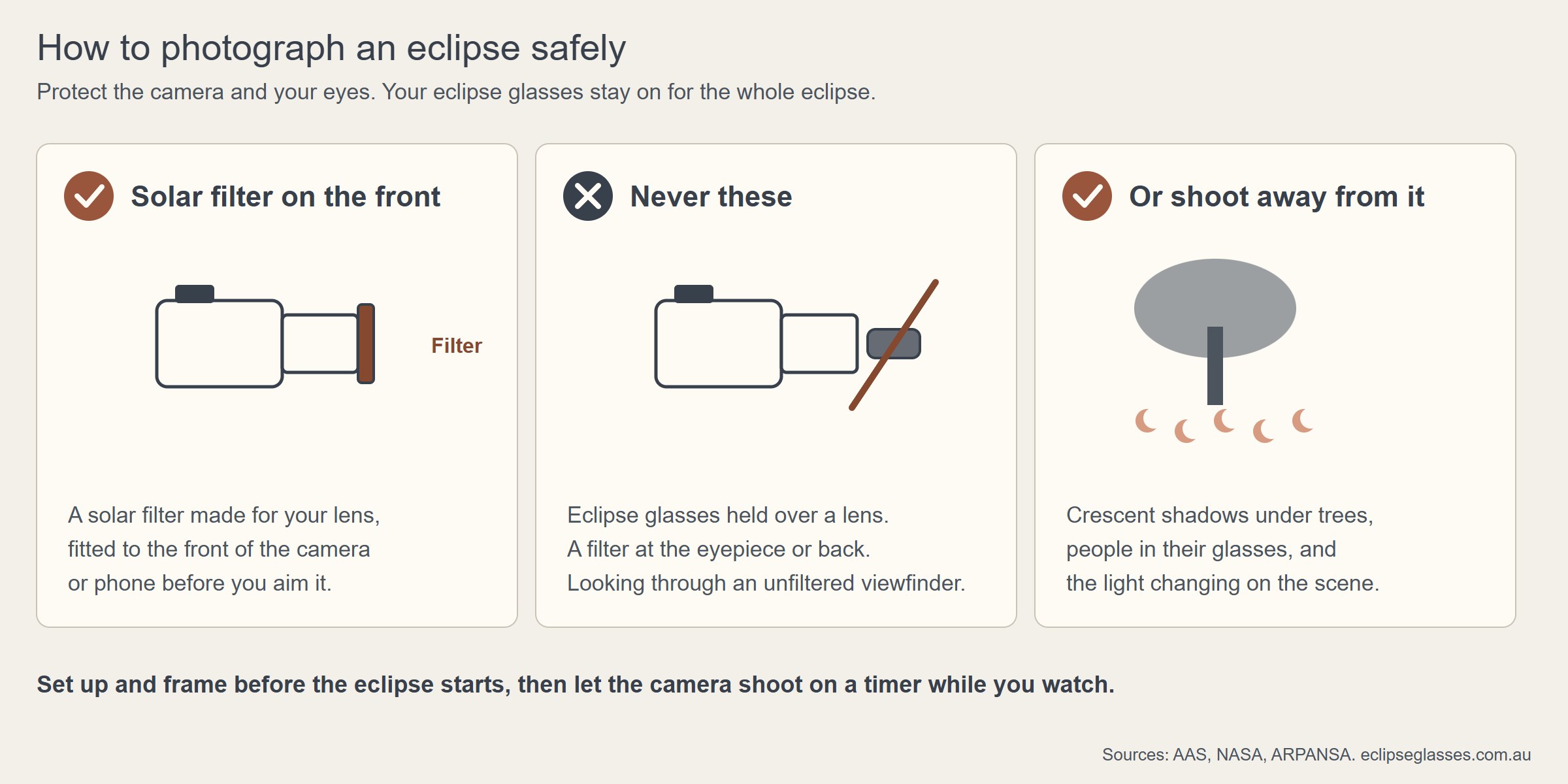
The short version. Never look through an unfiltered camera, phone, binoculars or telescope. Your camera needs its own solar filter on the front of the lens; eclipse glasses are not a lens filter. Frame the shot before the eclipse begins, shoot on an interval timer, and keep your eclipse glasses on for the whole eclipse.
Protect your eyes first
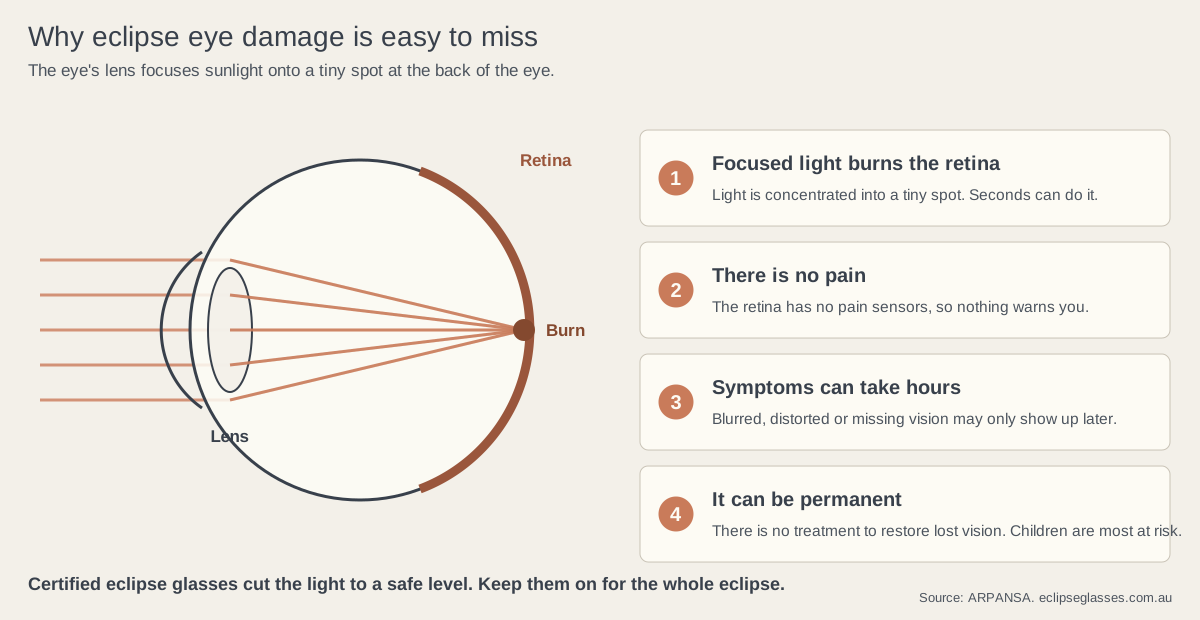
A camera lens, binoculars or a telescope concentrates sunlight. ARPANSA warns that using optical aids without a properly fitted specialist solar filter causes immediate and severe eye damage, even if you are wearing eclipse glasses. NASA explains why: the concentrated light burns straight through the glasses' filter.
So the rules are simple. Never look through any viewfinder, binoculars or telescope during the eclipse. Keep your eclipse glasses on for the whole eclipse, totality included. Our guide to why you need eclipse glasses explains what an eclipse can do to your eyes.
Your camera needs its own solar filter
The American Astronomical Society says cameras, binoculars and telescopes need a solar filter for two reasons: to protect your eyes, and to protect the equipment. In every case the filter goes on the front of the lens, so sunlight is filtered before the lens concentrates it.
- Buy a filter made for your lens. Camera solar filters come in screw-on and magnetic types, and clip-on types for phones. Some show the Sun white, others yellow or orange; the AAS says all work.
- Never use eclipse glasses as a lens filter. NASA says not to use eclipse glasses or handheld viewers with cameras.
- Never use a filter at the back. The AAS warns that eyepiece filters sold with cheap telescopes are dangerous: concentrated sunlight burns through them.
- Ask an expert. NASA advises getting expert advice before using a solar filter with a camera. A local astronomy club or a good camera shop can check your setup.
Fit the filter securely so wind or a bump cannot knock it off, and check it for scratches or pinholes before each use, as you would your glasses.
Phones
The same rules apply. Fit a solar filter made for phones over the lens before you point it at the eclipse. A phone's wide lens makes the eclipse look tiny, so the best phone photos are usually of the scene and the people around you, which need no filter at all (see below). Never hold eclipse glasses over the lens: wear them.
Set up early, then let the camera work
You cannot read a camera screen through eclipse glasses, so do all the camera work before the eclipse starts, then leave the camera alone:
- Practise on an ordinary sunny day with the filter fitted, so you know your settings and how the shot will look.
- Put the camera on a tripod and fit the solar filter before you aim it.
- Aim using the camera's screen, with the filter on. Never sight along the lens or glance up to line it up. On 22 July 2028 the eclipse is in the north-west sky in Sydney, about three fists above the horizon at totality. Use manual focus so it does not hunt.
- Choose a lens wide enough to keep the eclipse in frame. The Sun moves across the sky by about 35 degrees during the eclipse, so a fixed telephoto shot loses it within minutes. A wider lens turns that into a sequence of the eclipse crossing the sky. For close-ups you need a tracking mount; ask an astronomy club.
- Shoot on an interval timer, every minute or so, started before the eclipse begins.
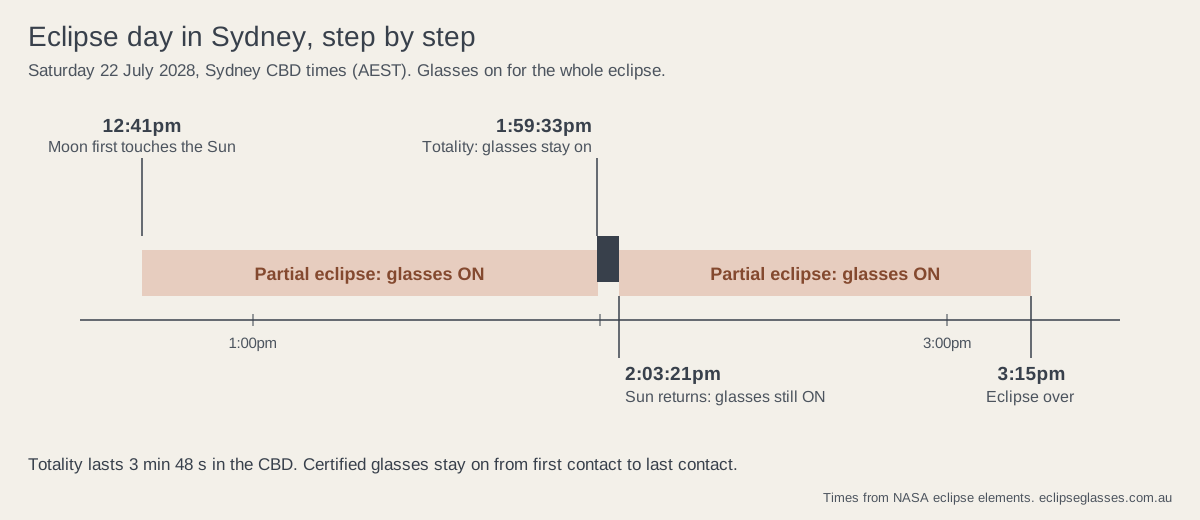
- Keep your glasses on from the moment the eclipse starts. Leave the camera alone, and check your photos after the eclipse ends.
Pack a spare battery and memory card: an eclipse lasts over two and a half hours from start to finish. Our 10 best places in Sydney lists spots with a clear north-west view.
Totality and your filter
Our rule is the most cautious one: filters stay on the camera and glasses stay on your eyes for the whole eclipse, totality included. Through a solar filter totality is very dark, so photos of the corona will not come out. That is the trade-off for following ARPANSA's advice never to observe any eclipse with the naked eye. Capture totality with the camera facing away instead: the sudden darkness, the glow along the horizon and the faces around you.
Five eclipse photos that need no filter
Each of these keeps the camera, and you, facing away from the eclipse.
- Crescent shadows under trees. Gaps between leaves work like pinholes, so the ground under a tree fills with small crescents during the partial eclipse.
- A pinhole projection. Make a hole about 1 mm wide in a card and let it cast an image of the eclipse onto white card about 1 m away, with your back to the eclipse.
- People in their glasses. Stand with your back to the eclipse and photograph the crowd.
- The light changing on a familiar scene. Frame a street, a beach or your backyard facing away from the eclipse, and shoot the same view every few minutes.
- The horizon at totality. Facing away from the eclipse, the sky goes dark and the horizon glows like sunset all the way round.
What to pack
- Certified ISO 12312-2 eclipse glasses for everyone, plus spares
- A solar filter for every lens you will point at the eclipse
- Tripod, remote release or interval timer, spare battery and memory card
- A sheet of card with a pinhole, and a white card to project onto
Certified, lab-tested eclipse glasses from NSW stock, A$5.45 a pair including GST.
Shop eclipse glassesFAQ
Can I photograph a solar eclipse with my phone?
Yes, with a solar filter made for phones fitted over the lens before you point it at the eclipse. Set it up before the eclipse starts, keep your eclipse glasses on, and check your photos after the eclipse ends.
Can I put eclipse glasses over my camera lens?
No. NASA says not to use eclipse glasses or handheld viewers with cameras. Use a solar filter made for your lens, fitted to the front.
Can I use the camera viewfinder during the eclipse?
No. Never look through any viewfinder during the eclipse: ARPANSA warns that optics without a proper solar filter cause immediate and severe eye damage. Frame the shot on the screen before the eclipse begins and watch the eclipse in your glasses.
Do I need a filter on the camera during totality?
Our advice is the most cautious: keep the filter on the camera and the glasses on your eyes for the whole eclipse. Photograph totality by facing away from the eclipse instead.
Does the camera need a filter to protect itself?
Yes. The American Astronomical Society says solar filters protect both your eyes and the equipment.
Where should I photograph the 2028 eclipse in Sydney?
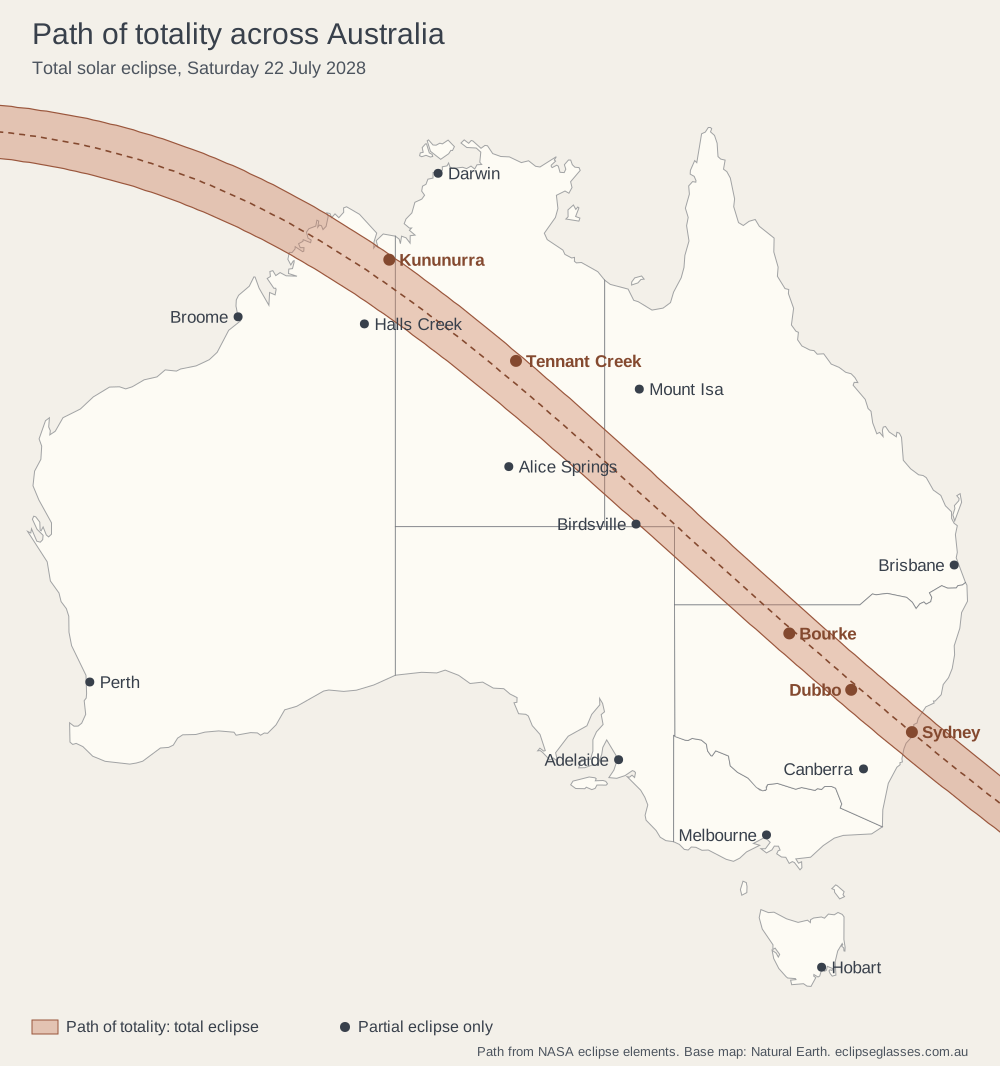
Anywhere with a clear view to the north-west, where the eclipse sits about three fists above the horizon at totality. Our guide to the 10 best places in Sydney lists spots.
Sources
All checked 11.11.2026.
- American Astronomical Society, Solar filters for optics and Solar eclipse eye safety.
- NASA, Eclipse safety.
- ARPANSA (Australian Radiation Protection and Nuclear Safety Agency), Solar eclipse.
- Sydney eclipse position and times from NASA eclipse elements, as in our 2028 eclipse guide.
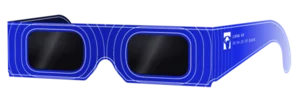
Aura Sight glasses for everyone watching
ISO 12312-2 certified and lab-tested, with a QR batch certificate on every pair. The family kit has four pairs and a printed viewing guide.