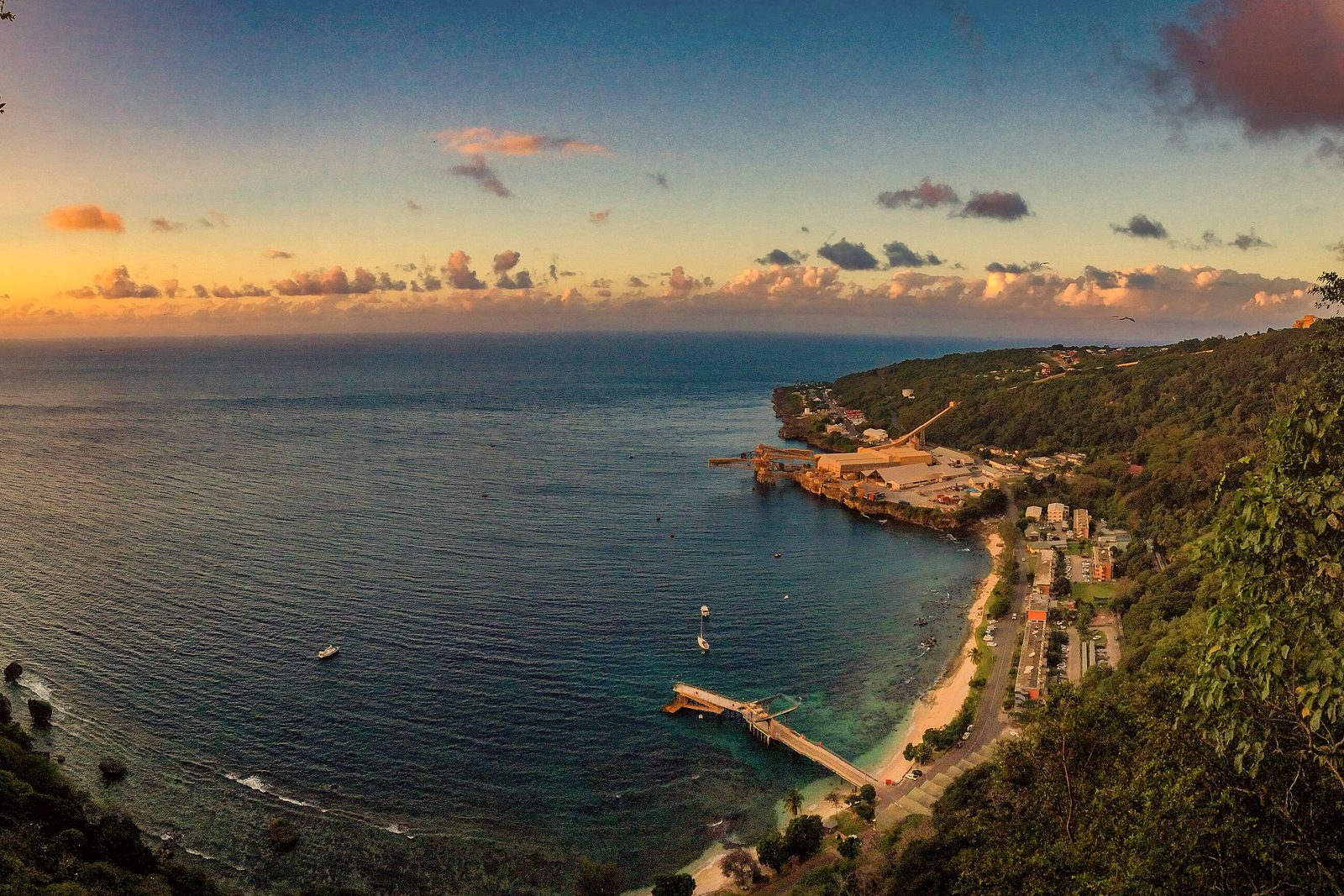
The short version. Christmas Island: totality 8:54am to 8:59am CXT, up to 4 min 4 s on the south-west of the island. Cocos (Keeling) Islands: totality 8:12am to 8:16am CCT, 3 min 26 s (West Island). Fly in from Perth by the Friday, book beds now, and pack certified eclipse glasses for everyone.
What time is the eclipse on Christmas Island and the Cocos Islands?
On Christmas Island totality runs from 8:54am to 8:59am CXT; on the Cocos Islands from 8:12am to 8:16am CCT. The whole eclipse, partial phases included, lasts about two and a half hours.
| Stage | Christmas Island | Cocos Islands |
|---|---|---|
| Eclipse starts | 7:40am | 7:04am |
| Totality starts | 8:54am | 8:12am |
| Mid-totality | 8:57am | 8:14am |
| Totality ends | 8:59am | 8:16am |
| Totality lasts | 3 min 53 s | 3 min 26 s |
| Eclipse ends | 10:26am | 9:35am |
| Sun height | 35° | 24° |
| Direction | North-east (56°) | East-north-east (61°) |
Times are rounded to the nearest minute. Other eclipse calculators differ by a few seconds. The two islands keep different clocks: Cocos is half an hour behind Christmas Island, and both are behind Perth (AWST, UTC+8).
Is Christmas Island in the path of totality?
Yes. Christmas Island and the Cocos (Keeling) Islands are both well inside the path, so every inhabited part of both gets totality.
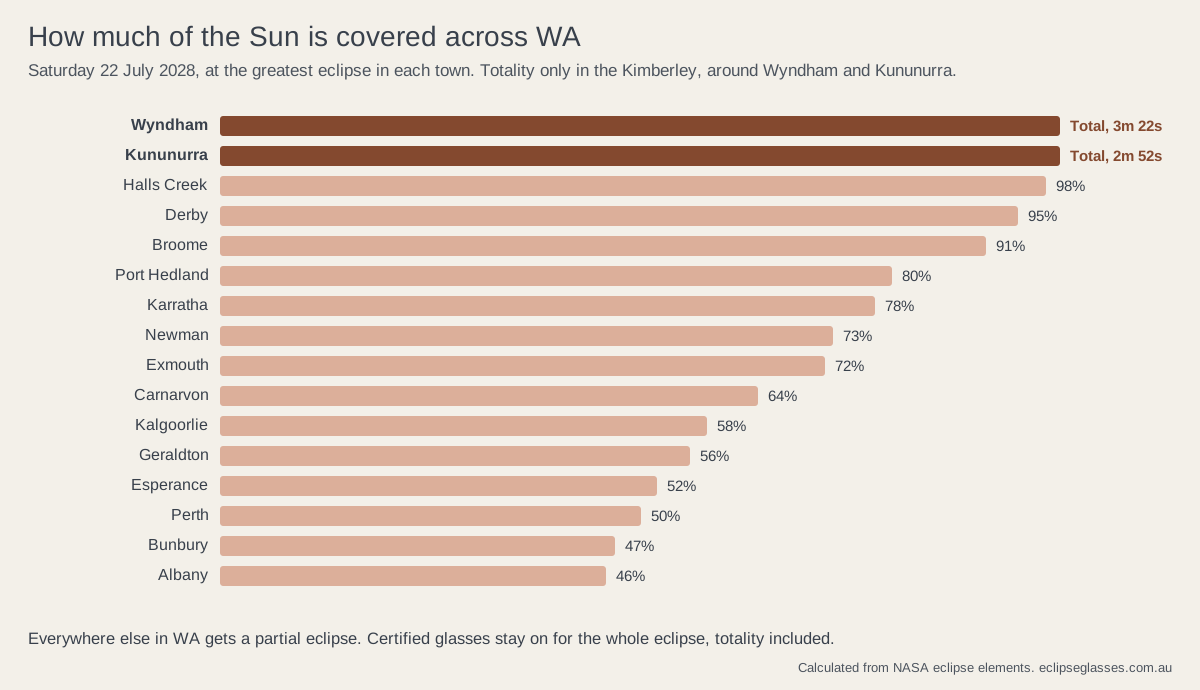
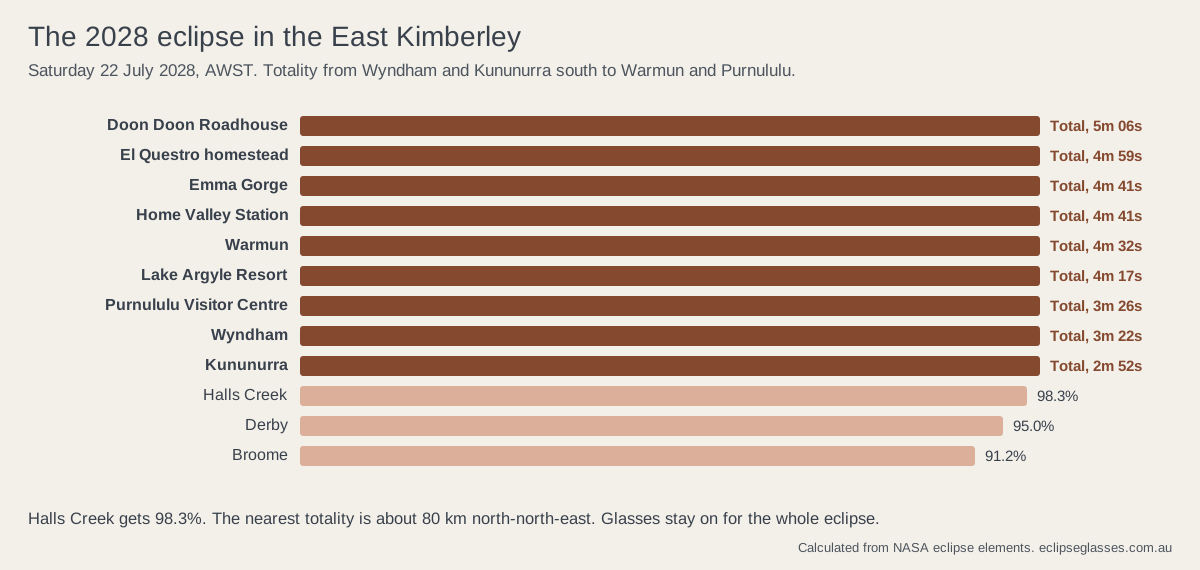
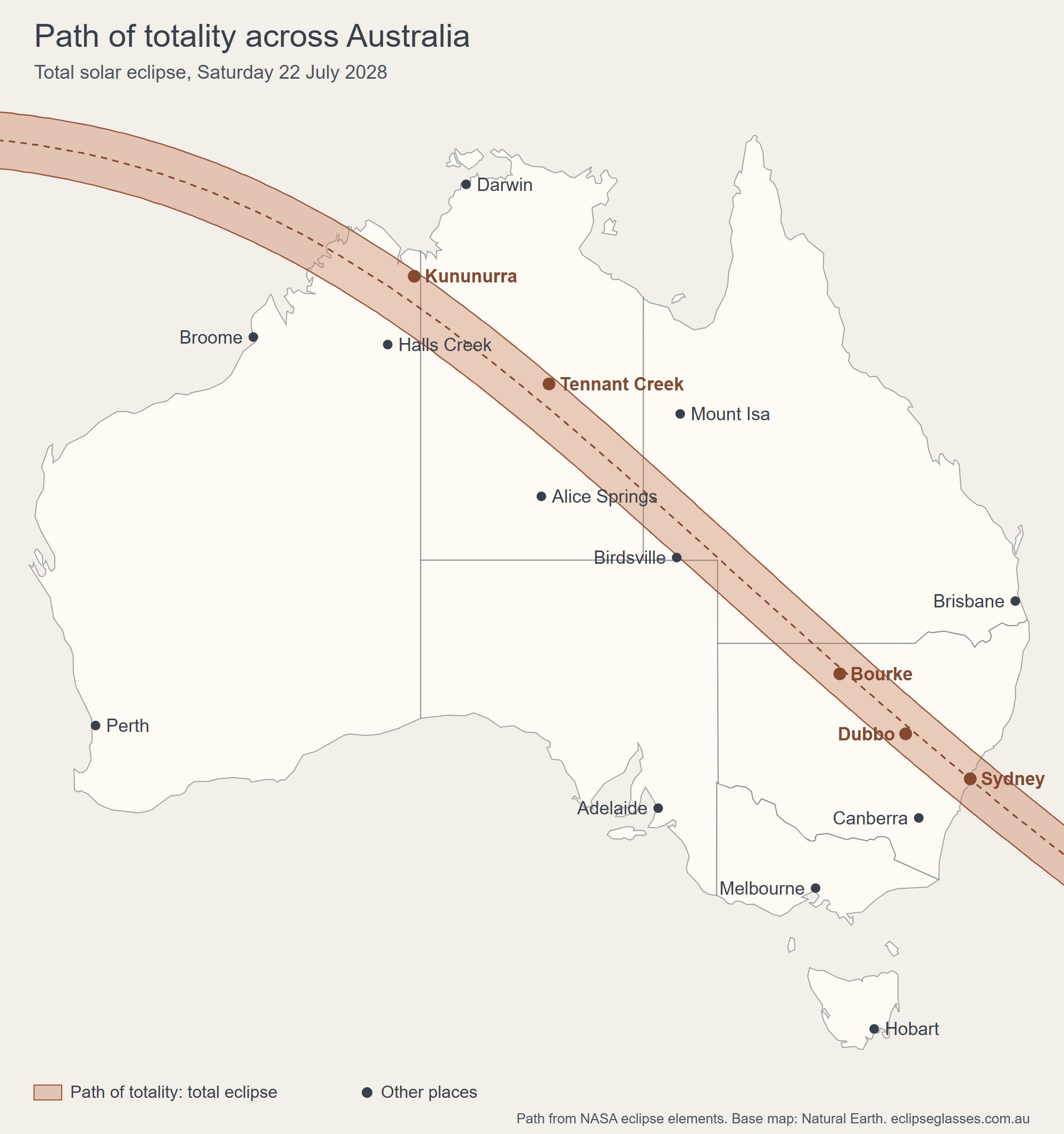
The shadow reaches Cocos first, about 13 minutes before Christmas Island and over an hour before it crosses the Kimberley coast. For every place on the path, see where the 2028 solar eclipse is visible and our 2028 total solar eclipse in Australia guide. On the mainland, the nearest totality is in the Kimberley eclipse at Kununurra and Wyndham. To the north-east, see the solar eclipse in Bali.
The map below shows the mainland. The two islands sit on the same path, off the map to the north-west.
Where is the best place to watch the eclipse on Christmas Island?
Anywhere with an open view to the north-east, where the eclipse is 35° up; totality is longest in the south-west of the island, up to 4 min 4 s.
| Place | Totality lasts |
|---|---|
| Flying Fish Cove (The Settlement) | 3 min 53 s |
| Poon Saan | 3 min 55 s |
| Drumsite | 3 min 55 s |
| Airport | 3 min 56 s |
| The Dales | 3 min 58 s |
| Dolly Beach | 4 min 0 s |
| South Point | 4 min 4 s |
Totality starts within a few seconds of 8:54am everywhere on the island. Eclipsophile notes open views to the north-east around the airport and golf course. Flying Fish Cove, in the photo above, is the main town.
Where is the best place to watch the eclipse on the Cocos Islands?
West Island or Home Island: totality is 3 min 26 s (West Island), with the eclipse 24° up to the east-north-east, out over the lagoon from West Island.
| Place | Totality lasts |
|---|---|
| West Island (airport) | 3 min 26 s |
| Home Island (Pulu Selma) | 3 min 30 s |
| Direction Island | 3 min 31 s |
| South Island | 3 min 19 s |
| North Keeling (Pulu Keeling) | 3 min 32 s |
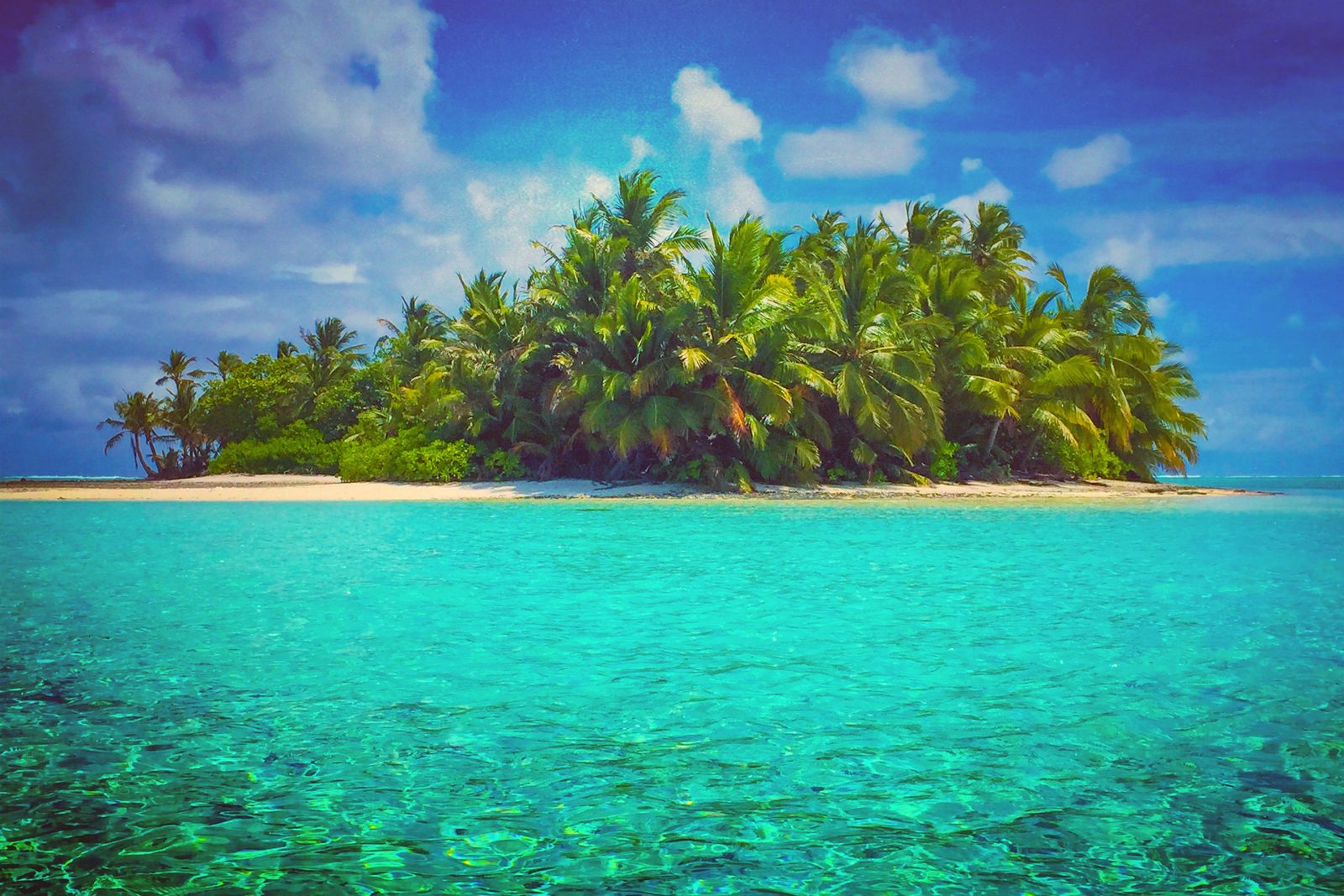
West Island and Home Island are the only inhabited islands; the Cocos Malay name for the group is Pulu Kokos. North Keeling is a national park and hard to reach.
Will it be cloudy for the eclipse on Christmas Island and Cocos?
Cloud is a real risk: Space.com puts the chance of cloud at 57% on Christmas Island and 65% on the Cocos Islands.
Eclipsophile reports that Christmas Island is usually partly cloudy with broken cumulus in July, and was overcast on only 3 of 23 recorded 22 Julys. On Cocos, July is showery and the second-wettest month, yet 12 of the last 23 years were clear on 22 July. Read more in our 2028 eclipse weather and cloud odds.
How do I get to Christmas Island and the Cocos Islands for the eclipse?
QantasLink flies from Perth twice a week, on Mondays and Fridays. The eclipse is on a Saturday, so plan to arrive on the Friday flight or earlier and stay several nights.
The Monday flight runs Perth, Christmas Island, Cocos, Perth. The Friday flight runs Perth to Cocos direct (about 4 h 10 min), then Christmas Island, then Perth. Flights leave from Perth's international terminal (T1), so check what ID you need with the airline. Cocos tourism expects flights for eclipse week to open about a year ahead.
Where can I stay for the eclipse?
Book now: the Cocos Islands have just 144 visitor beds across West Island and Home Island, and several providers are already taking July 2028 bookings.
Christmas Island also has limited rooms; the Christmas Island Tourism Association handles bookings.
Will the red crab migration be on during the eclipse?
No. The red crab migration on Christmas Island starts with the first wet-season rains, usually in October or November, well after the July eclipse.
Do you need eclipse glasses on Christmas Island and Cocos?
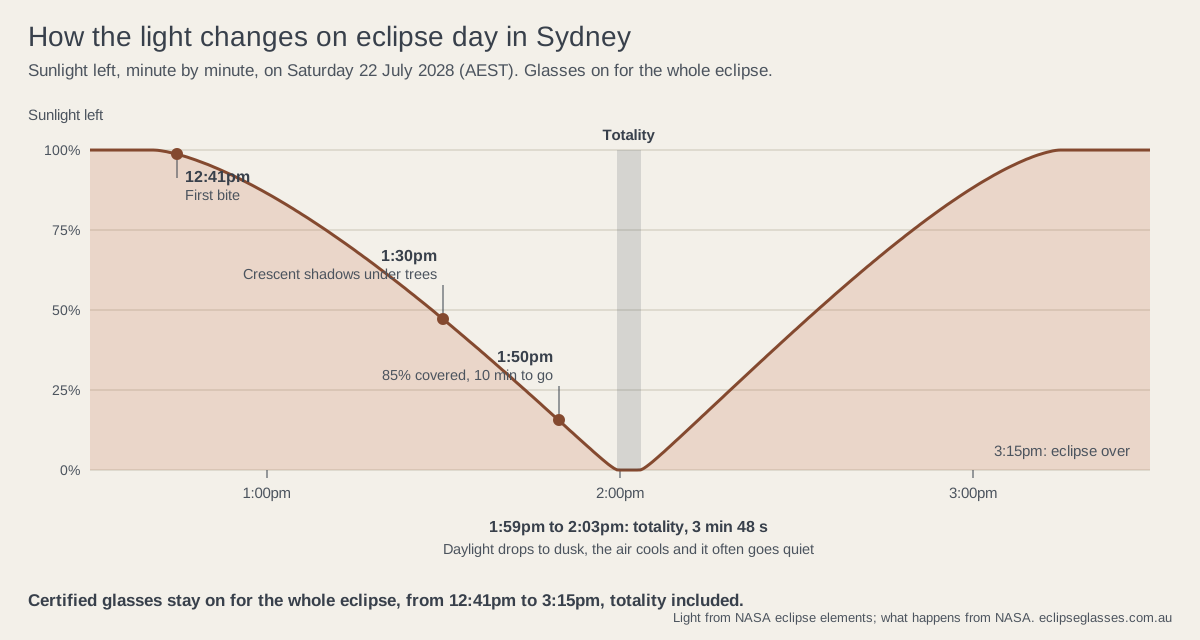
Yes, everyone does, for the whole eclipse. The partial phases before and after totality last over an hour each, and certified glasses stay on for the whole eclipse, totality included.
Never use eclipse glasses with binoculars, a camera or a phone; optics need their own solar filter.
Running a resort, tour, school or event on the islands? Ask for an event quote for bulk eclipse glasses, with freight priced per order. Tour operators can also see wholesale eclipse glasses and our notes for eclipse tourism operators.
We don't deliver to Christmas Island or Cocos: order to your home address in Australia or New Zealand and pack them. Certified eclipse glasses are A$5.45 a pair; pre-orders ship from NSW by 31 May 2028.
Christmas Island and Cocos eclipse: questions
What time is the total solar eclipse on Christmas Island?
On Saturday 22 July 2028 totality on Christmas Island runs from 8:54am to 8:59am CXT (UTC+7), 3 min 53 s at Flying Fish Cove. The partial eclipse starts at 7:40am and ends at 10:26am.
How long is totality on the Cocos (Keeling) Islands?
3 min 26 s (West Island), from 8:12am CCT (UTC+6:30). The partial eclipse runs from 7:04am to 9:35am.
Are the Cocos Islands the first place to see the 2028 total eclipse?
Yes. The Cocos (Keeling) Islands are the first land the totality reaches on 22 July 2028, about 13 minutes before Christmas Island and over an hour before the Kimberley.
How do you get to Christmas Island for the 2028 eclipse?
QantasLink flies from Perth on Mondays and Fridays, calling at both islands. The eclipse is on a Saturday, so arrive by the Friday flight and plan to stay several nights.
Will the red crabs be migrating during the eclipse?
No. The Christmas Island red crab migration starts with the first wet-season rains, usually in October or November.
Do I need eclipse glasses on Christmas Island?
Yes. Certified glasses stay on for the whole eclipse, totality included. Resorts, tours and events can get a bulk quote. Visitors: order to your mainland address and pack them: ISO 12312-2 certified eclipse glasses are A$5.45 a pair and the family eclipse kit (four pairs) is A$19.25. We don't deliver to the islands, so order before you fly. Our guide to where to buy eclipse glasses in Australia lists what to check on any pair.
Sources
All checked 20.11.2026.
- Times calculated from NASA's Besselian elements for the 22 July 2028 eclipse, Fred Espenak, NASA GSFC, with Delta T of 69.2 s, rounded to the nearest minute. Compared with timeanddate and Wikipedia.
- Cloud: Space.com, 2028 eclipse cloud chances by place; Jay Anderson, Eclipsophile, 2028 eclipse.
- Flights: Cocos Keeling Islands Tourism, flights; Christmas Island Tourism Association, flights; CAPA.
- Beds and bookings: Cocos Keeling Islands Tourism, accommodation and 2028 total solar eclipse.
- Red crabs: Parks Australia, Christmas Island National Park, crab migration.
- ARPANSA, Solar eclipse; American Astronomical Society, Solar eclipse eye safety; NASA, Eclipse safety.
Aura Sight supplies schools, councils and events
Bulk cartons from NSW stock with the certification pack for your safety officer, or glasses printed with your logo from 1,000 units per design.