
Sydney CBD (Town Hall) · Sat 22 July 2028
3m 48s
of totality
1:59:37 pm to 2:03:26 pm AEST
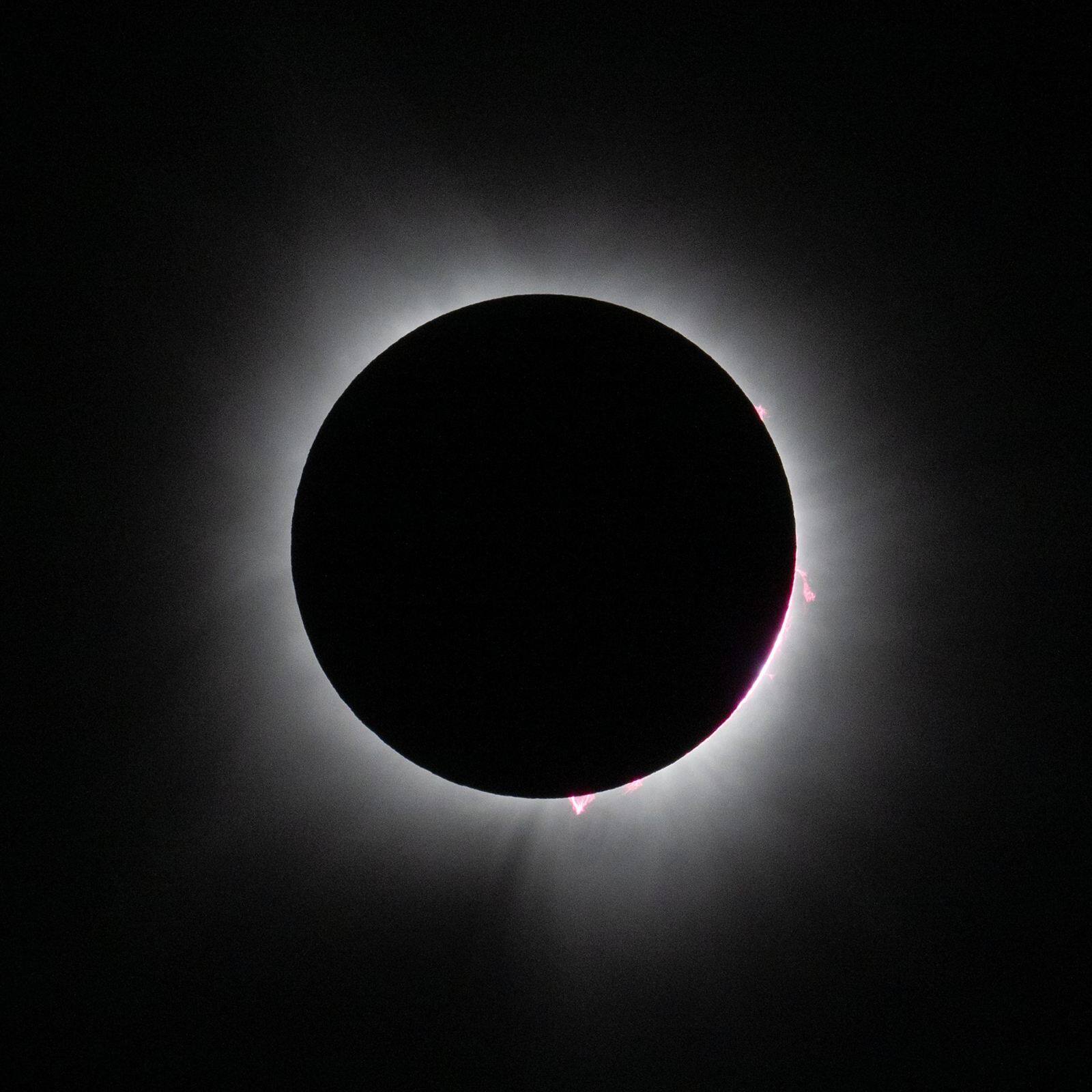
The eclipse over Town Hall, drawn to scale · 2 h 34 min from start to finish
Sydney eclipse times (AEST)
Eclipse begins 12:40:46 pm · Totality 1:59:37 pm to 2:03:26 pm (3 min 48 s) · Maximum 2:01:32 pm · Eclipse ends 3:14:43 pm. Times shift by a few seconds across the city; see the suburb table.
Harbour or your local park?
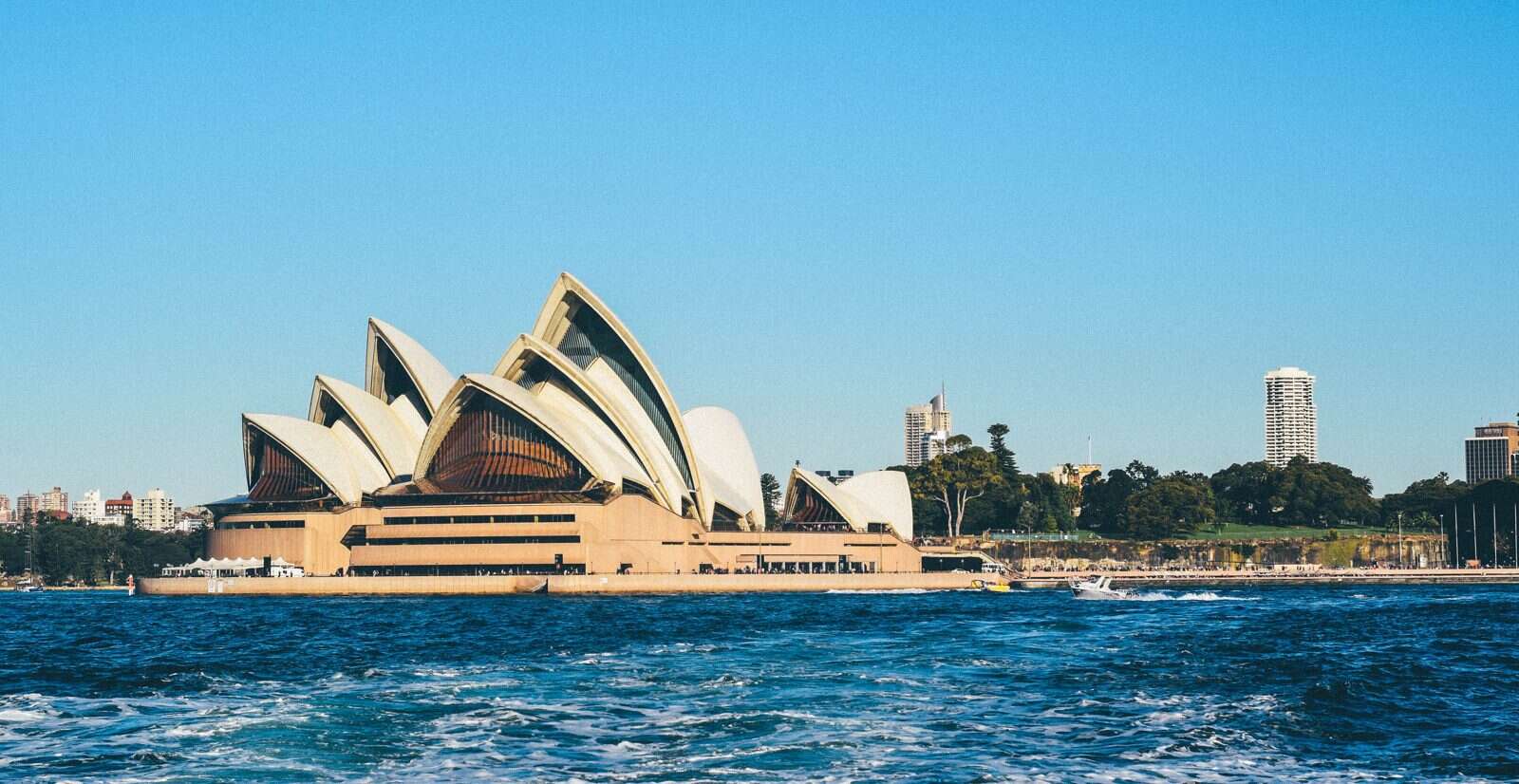
Totality lasts within a few seconds of 3 min 48 s everywhere from Parramatta to Bondi, so the Harbour isn't longer, just more iconic. If you want the Opera House and Bridge in the frame, commit to a foreshore spot and get there early. If you'd rather have room to spread out, a local oval or park with open sky to the north-west gives you the same totality without the crowds.
Northern beaches and Hills District residents get almost exactly the same duration. Palm Beach is the one notable exception at about 3 min 34 s, because it's closer to the path's northern edge.
Getting there on the day
Leave the car at home. Sydney Trains, the Metro (Barangaroo station is a short walk to Barangaroo Reserve), ferries and the L2/L3 light rail all serve the main foreshore sites. Expect special event timetables if the city runs official viewing areas, and plan your trip home too: everyone will leave at once at about 3:15 pm when the eclipse ends.
If the forecast looks cloudy
Sydney's winter cloud is often patchy. In 26 years of satellite records for 22 July, about a third of days were clear, five were overcast and the rest had gaps. A westerly wind usually means clearer skies. If a band of coastal cloud is forecast, the western suburbs (Penrith, Richmond, Campbelltown) often sit just beyond it and still get 3.5+ minutes of totality.
What you'll see in Sydney, minute by minute
Times are AEST for Sydney CBD (Town Hall).
- 12:40:46 pmfirst contact. Through your glasses the Sun shows a small notch on its right-hand edge. Nothing else on the foreshore changes yet.
- About 1:29 pmthe Sun is about 52% covered. Light on the harbour goes flat and slightly metallic, and under the Botanic Garden trees the dappled shadows turn into small crescents.
- About 1:44 pmabout 76% covered. It is not yet quarter to two, but the foreshore light looks like late afternoon, the air cools and birds may go quiet.
- About 1:54 pmabout 93% covered. Look past the Bridge to the north-west: that part of the sky darkens first as the Moon's shadow races in at more than 4,000 km/h.
- 1:59:37 pma last bright point of sunlight, the diamond ring, then totality. Glasses stay on. Seen from Mrs Macquaries Point, the eclipsed Sun sits up and to the right of the Bridge, over Kirribilli. The sky goes dark and a sunset glow runs right around the horizon.
- 2:03:26 pmthe second diamond ring flashes on the opposite side of the Moon. Glasses stay on.
- 3:14:43 pmlast contact. The Moon clears the Sun's edge and the eclipse is over, right about when the foreshore crowds start heading for the trains and ferries.
Where to look
Totality puts the Sun about 29° up in the north-north-west, on a bearing of 328° true. From Mrs Macquaries Point that is up and to the right of the Bridge arch, over Kirribilli. An ocean view doesn't matter; open sky in that one direction does, and in the city the towers are what usually take it away. Anything to your NNW hides the Sun if it is closer than about 1.8 times its own height, so a 20-storey tower (60 m) needs to be at least 110 m away and a 10 m tree at least 18 m. That is why the harbour sites that work, like Barangaroo Reserve, look north-west over water with the CBD behind you.
Where the Sun is at totality · North-north-west, up and right of the Bridge from Mrs Macquaries Point
The path near Sydney · numbers match the spots below
Near the CBD, check the towers: anything to your NNW hides the Sun if it's closer than about 1.8× its own height. A 20-storey tower needs 110 m of clear space, a 10 m tree 18 m.
The best spots
For the iconic shot, choose foreshore sites on the south and west of the harbour that look north-west over water: Mrs Macquaries Point, Observatory Hill, Barangaroo Reserve and Nielsen Park. For space and an easy day with kids, pick a big park like Centennial Park. Totality is the same length across the city, so you can stay local.
Crowds and transport
Expect NYE-style crowds at the harbour icons, with vantage points filling by late morning and closing when full. Use trains, Metro, ferries and light rail, and don't plan on parking near the foreshore. It's a Saturday, so bring warm layers. The temperature dips during totality.
Where to watch in Sydney
Mrs Macquaries Point (Royal Botanic Garden)
Harbour foreshore headland · City of Sydney
The classic composition, with corona, Opera House and Bridge in one frame, from a large managed site.
Sightline. Faces NW across Farm Cove. The Opera House sits at about 296° and the Bridge arch at about 307°, so the eclipsed Sun (328°, 29° up) appears up and to the right of the Bridge, over Kirribilli. Open water means nothing blocks it.
Getting there. 15 to 20 min walk from Circular Quay, St James or Martin Place. Enter from Art Gallery Road. Facilities. Toilets, water stations; bars and food trucks if activated as for NYE
Heads up. Bag checks and closure when full are likely. Have a fallback in the Domain or the Botanic Garden lawns.
Observatory Hill Park & Sydney Observatory
Hilltop park / historic observatory · City of Sydney (The Rocks)
The most 'astronomical' place in the city, with elevation, open NNW sky and likely telescope and solar-scope access.
Sightline. At 43 m elevation, the park looks NW over Walsh Bay towards Balls Head and Goat Island. The Sun at 328° sits over open water and low wharves. Some fig trees on the lawn block it, so pick a clear patch.
Getting there. Under 10 min walk from Wynyard or Circular Quay, via the Argyle Cut or Watson Road. Facilities. Toilets, Observatory museum, nearby Rocks cafes
Heads up. Smaller than the blog-quoted 8,000; the official NYE figure is 4,500.
Barangaroo Reserve
Harbour headland park · City of Sydney
Big open lawns, terraced sandstone seating and an uninterrupted NNW sky, a short walk from the Metro.
Sightline. The western edge of the CBD peninsula, facing W/NW over Johnstons Bay and Goat Island. The Sun at 328° is over open water, with the CBD towers safely behind you to the east and south.
Getting there. About 300 m from Barangaroo Metro; 10 min from Wynyard. Facilities. Toilets, nearby Barangaroo dining
Heads up. Wind off the water. Bring layers.
Nielsen Park, Shark Beach (Vaucluse)
Harbour beach & lawns · Woollahra / Sydney Harbour NP
One of the few harbour beaches that faces the Sun's direction, with a calmer family setting than the CBD foreshore.
Sightline. Shark Beach looks out across the harbour, with Bradleys Head to the west. The Sun at 328° sits over open water towards Clifton Gardens and Chowder Bay, an aligned view with no buildings.
Getting there. Bus 325 from Edgecliff; parking is very limited. Walk the Hermitage Foreshore Track from Rose Bay. Facilities. Toilets behind Shark Beach, cafe, accessible ramp to the beach
Heads up. The park opens sunrise to sunset; NPWS may manage numbers. There's little parking.
Centennial Park
Major parkland · Centennial Parklands
Guaranteed room, easy for families, no ticketing, and the same 3 min 48 s as the Harbour.
Sightline. Open grass fields with 360° sky. Choose a field with no tall trees within about 20 m to your NNW.
Getting there. Buses from Bondi Junction and the CBD; L2/L3 light rail to Moore Park; cycle paths. Facilities. Toilets, cafes, parking (limited on the day)
Heads up. Parking will fill. Use public transport.
Eclipse times around Sydney
Length of totality
| Place | Totality begins | Totality | Coverage |
|---|---|---|---|
| Sydney CBD | 1:59:37 pm | 3m 48s | 100% |
| Manly | 1:59:44 pm | 3m 46s | 100% |
| Bondi Beach | 1:59:44 pm | 3m 48s | 100% |
| Chatswood | 1:59:35 pm | 3m 48s | 100% |
| Hornsby | 1:59:27 pm | 3m 48s | 100% |
| Palm Beach | 1:59:51 pm | 3m 34s | 100% |
| Parramatta | 1:59:19 pm | 3m 49s | 100% |
| Sutherland | 1:59:29 pm | 3m 44s | 100% |
| Cronulla | 1:59:36 pm | 3m 45s | 100% |
| Liverpool | 1:59:16 pm | 3m 45s | 100% |
| Campbelltown | 1:59:16 pm | 3m 31s | 100% |
Times AEST, computed from JPL DE421 lunar ephemeris and cross-checked against NASA/Espenak Besselian elements. Out towards the path edge, as at Palm Beach, a short move can change the duration by 10 s or more.
Weather odds and crowds
A typical July · Sydney (Observatory Hill), BOM 066062
Satellite records for 22 July from 2000 to 2025 (Eclipsophile): 9 clear, 12 with openings, 5 overcast. Cloud is often patchy across the city, so a westerly-wind day is the best bet. Mean 3 pm temperature in July is 16.4°C, but expect it to drop a few degrees during totality.
Every Sydneysider is in the path, so demand spreads across thousands of parks. The Harbour icons will reach NYE-style capacity, because the 'eclipse over the Opera House and Bridge' image is what every visitor and broadcaster will want. Expect foreshore vantage points to fill by late morning and some to close when full.
Eye safety

From first contact at 12:40:46 pm to last contact at 3:14:43 pm, keep ISO 12312-2 certified eclipse glasses on for the whole eclipse, including the minutes of totality from 1:59:37 pm to 2:03:26 pm. Sunglasses, smoked glass and homemade filters are not safe. A camera, binoculars or a telescope, including any telescope at Observatory Hill, needs a proper solar filter on the front before you look through it.
Every pair is ISO 12312-2 certified and tested by an independent lab. You can check the test certificate online.
Buy eclipse glassesFor schools, councils and businesses in Sydney
Saturday 22 July 2028 is not a school day, so Sydney schools will need to hand out glasses and run safety lessons on Friday 21 July 2028 or earlier. Anyone hosting a viewing, from a harbourside venue in the CBD to a council park in Hornsby, Sutherland or Liverpool, should plan on one certified pair per guest. All 5.23 million Sydneysiders are in the path, so demand will be high in the final weeks. For groups we supply bulk cartons, fundraising boxes of 20 to 250 pairs for schools and clubs, and custom-branded glasses from 500 units, with an artwork proof sent before printing.
FAQ
What time is the eclipse in Sydney?
Eclipse from 12:40:46 pm; totality 1:59:37 pm to 2:03:26 pm AEST on Saturday 22 July 2028.
How long is totality in Sydney?
About 3 min 48 s in the CBD; 3 min 34 s at Palm Beach and about 3 min 31 s at Campbelltown.
Which direction should I face?
North-north-west, about 30° up. You don't need an ocean view, just no trees or buildings close by in that direction.
Do I need eclipse glasses in Sydney?
Yes, for the whole eclipse (about 2.5 hours in total). Certified glasses stay on from first contact to last contact, including the 3 min 48 s of totality.
More eclipse guides nearby
- Western Sydney eclipse guide
- Parramatta eclipse guide
- Central Coast eclipse guide
- Blue Mountains eclipse guide
- The whole NSW path eclipse guide
- 2028 eclipse times across Australia
- Interactive eclipse map
- The 10 best places in Sydney to watch