The short version. 22 July 2028: total in Queenstown and Dunedin, partial everywhere else. 10 March 2035: a ring of fire from Westport and Nelson to Masterton. 13 July 2037: total in Taupō, Hastings and Napier. 26 December 2038: total from Golden Bay to Palmerston North. Certified glasses stay on for the whole of every one.
Every solar eclipse in New Zealand to 2040
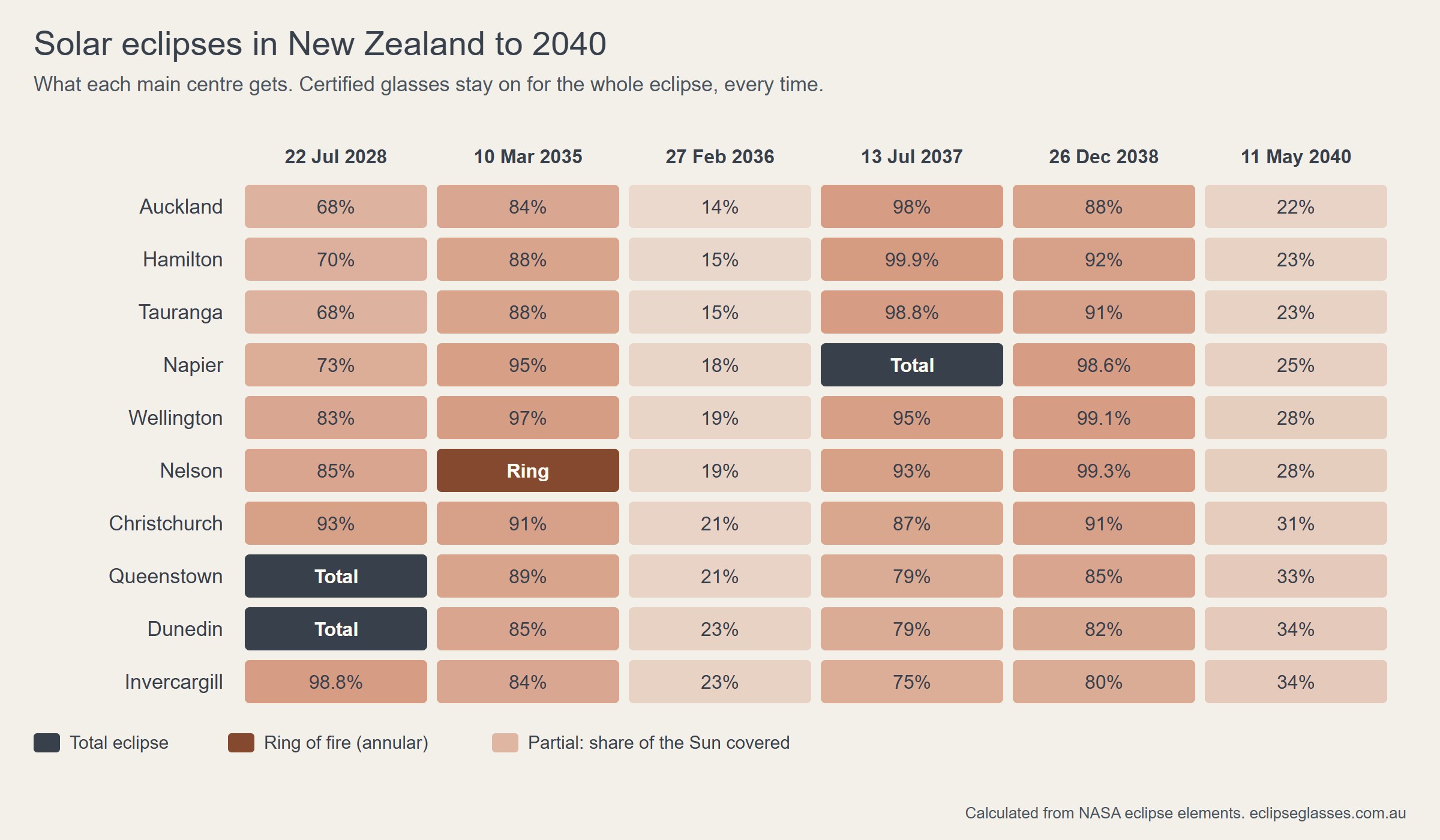
Six solar eclipses can be seen from New Zealand's main centres between now and 2040. Three are total somewhere in the country, one is a ring of fire, and two are partial everywhere.
| Date (NZ) | Type | Where | The main centres |
|---|---|---|---|
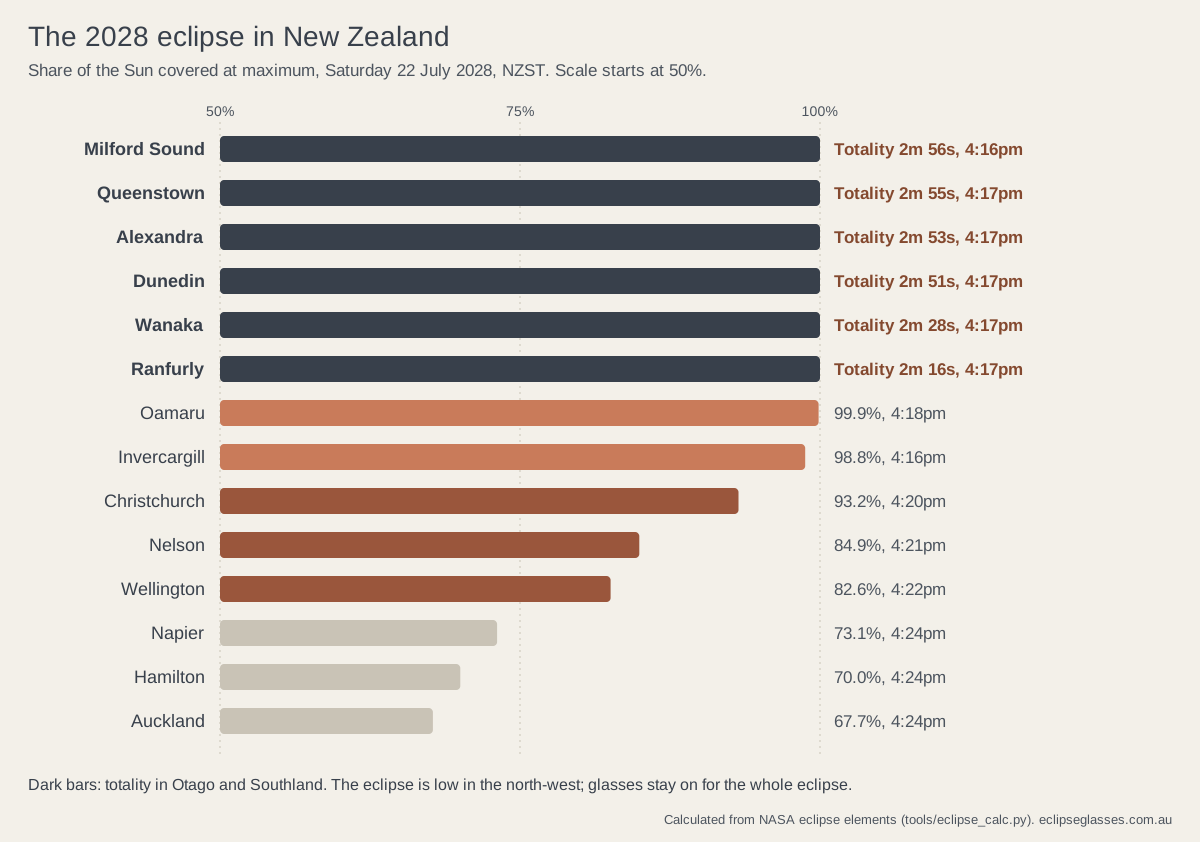
| Saturday 22 July 2028 | Total | Total near sunset in Fiordland, Otago and Southland: Milford Sound, Queenstown, Wanaka, Alexandra and Dunedin. | Total in Queenstown and Dunedin. Partial elsewhere, Sun covered at most: Invercargill 98.8%, Christchurch 93%, Nelson 85%, Wellington 83%. The Sun sets during the eclipse in Hamilton, Tauranga, Napier, Wellington, Nelson, Christchurch, Dunedin. |
| Saturday 10 March 2035 | Annular | A ring of fire for about a minute from Westport and Nelson across Cook Strait to the Wairarapa, around Masterton. | Ring of fire in Nelson. Partial elsewhere, Sun covered at most: Wellington 97%, Napier 95%, Christchurch 91%, Queenstown 89%. |
| Wednesday 27 February 2036 | Partial | Partial only, about a fifth of the Sun covered, in the early evening. | Partial elsewhere, Sun covered at most: Dunedin 23%, Invercargill 23%, Queenstown 21%, Christchurch 21%. |
| Monday 13 July 2037 | Total | Total in the mid-afternoon across the central North Island: Taupō, Hastings and Napier. | Total in Napier. Partial elsewhere, Sun covered at most: Hamilton 99.9%, Tauranga 98.8%, Auckland 98%, Wellington 95%. |
| Sunday 26 December 2038 | Total | Total in the early afternoon from Golden Bay (Tākaka) across Cook Strait to Manawatū (Palmerston North). | Partial elsewhere, Sun covered at most: Nelson 99.3%, Wellington 99.1%, Napier 98.6%, Hamilton 92%. |
| Friday 11 May 2040 | Partial | Partial only, about a quarter to a third of the Sun covered, close to sunset. | Partial elsewhere, Sun covered at most: Invercargill 34%, Dunedin 34%, Queenstown 33%, Christchurch 31%. The Sun sets during the eclipse in Auckland, Hamilton, Tauranga, Napier, Wellington, Nelson, Christchurch. |
The March 2035 eclipse is 9 March in NASA's tables, which use UTC; in New Zealand it happens on the morning of 10 March. The eclipses of 25 November 2030 and 21 May 2031 are not visible from New Zealand's main centres.
2028: totality in Otago and Southland
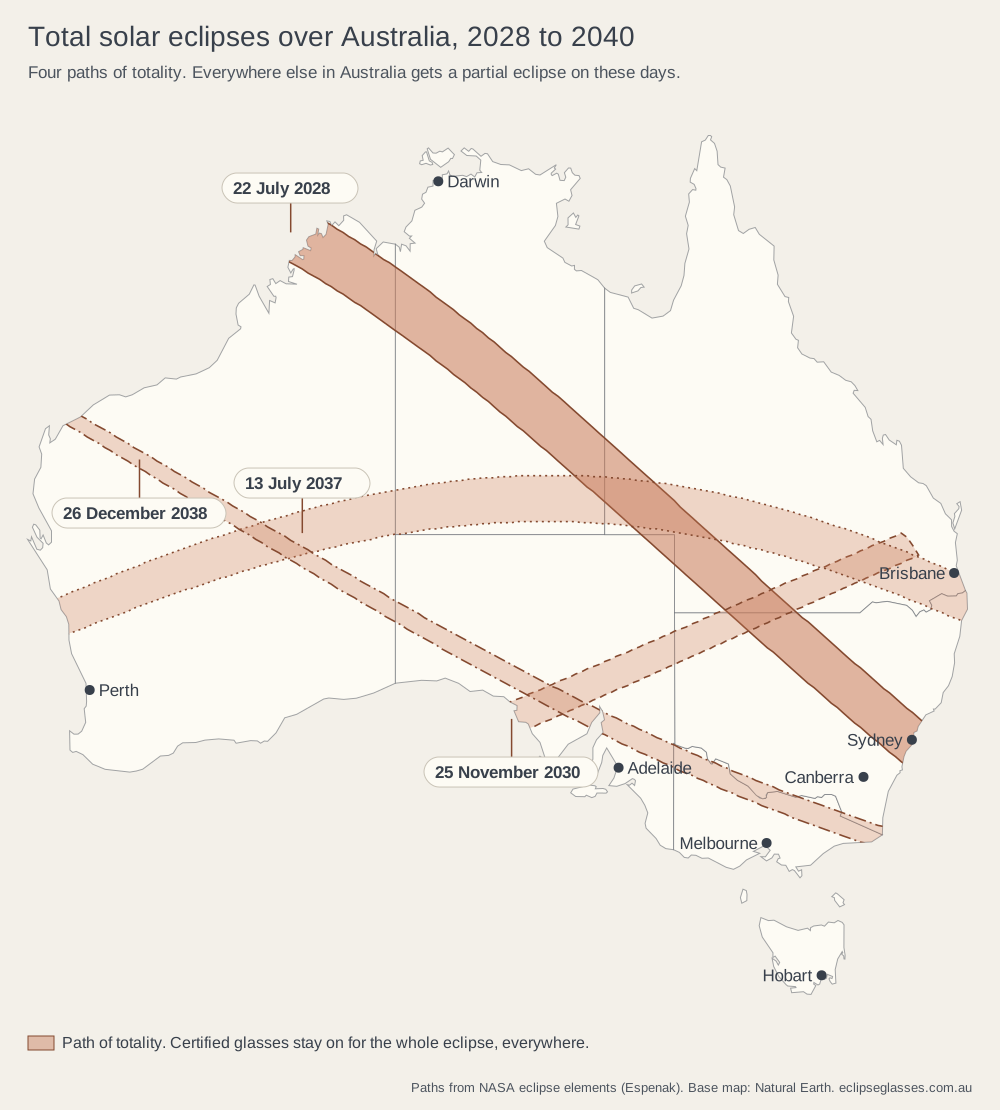
On 22 July 2028 the Moon's shadow crosses Australia, then the Tasman Sea, and leaves land over the lower South Island close to sunset. Milford Sound, Queenstown, Alexandra and Dunedin get close to three minutes of totality. Our guide to the 2028 eclipse in New Zealand covers where to watch and why a low view to the north-west matters.
2035: a ring of fire
On the morning of 10 March 2035 the Moon is too far from Earth to cover the Sun completely, so it leaves a bright ring around its edge: an annular eclipse. The ring is seen for about a minute along a path from Westport and Nelson across Cook Strait to the Wairarapa, around Masterton. Wellington, just outside the path, gets 97% covered. There is no moment of an annular eclipse when it is safe without protection: ARPANSA advises never to observe a total, partial or annular eclipse with the naked eye.
2037 and 2038: two totalities in 18 months
On 13 July 2037 totality crosses the central North Island in the mid-afternoon, with about 2 minutes 19 seconds in Napier and a little less in Taupō and Hastings. Hamilton misses by a whisker, at 99.9% covered, and Tauranga gets 98.8%. On 26 December 2038 totality crosses from Golden Bay over Cook Strait to Manawatū, with about 2 minutes in Palmerston North, while Wellington and Nelson get 99%. The University of Waikato points out that a small area near Waipukurau, in Central Hawke's Bay, is inside both paths.
Times in each main centre
Local times, NZST in winter and NZDT in summer. "Sun covered" is the share of the Sun's disc the Moon covers at the greatest eclipse. Where the Sun sets during an eclipse, the end happens below the horizon.
Auckland
No total eclipse or ring of fire reaches Auckland before 2040. The deepest partial eclipse is 98% on Monday 13 July 2037.
| Date | In Auckland | Begins | Greatest | Ends |
|---|---|---|---|---|
| Saturday 22 July 2028 | 68% of the Sun covered | 3:18pm | 4:24pm | 5:23pm NZST |
| Saturday 10 March 2035 | 84% of the Sun covered | 9:34am | 10:54am | 12:22pm NZDT |
| Wednesday 27 February 2036 | 14% of the Sun covered | 6:12pm | 6:59pm | 7:43pm NZDT |
| Monday 13 July 2037 | 98% of the Sun covered | 2:31pm | 3:49pm | 4:58pm NZST |
| Sunday 26 December 2038 | 88% of the Sun covered | 12:54pm | 2:23pm | 3:47pm NZDT |
| Friday 11 May 2040 | 22% of the Sun covered, sets during the eclipse | 3:25pm | 4:29pm | At sunset NZST |
Hamilton
No total eclipse or ring of fire reaches Hamilton before 2040. The deepest partial eclipse is 99.9% on Monday 13 July 2037.
| Date | In Hamilton | Begins | Greatest | Ends |
|---|---|---|---|---|
| Saturday 22 July 2028 | 70% of the Sun covered, sets during the eclipse | 3:18pm | 4:24pm | At sunset NZST |
| Saturday 10 March 2035 | 88% of the Sun covered | 9:35am | 10:55am | 12:23pm NZDT |
| Wednesday 27 February 2036 | 15% of the Sun covered | 6:09pm | 6:58pm | 7:42pm NZDT |
| Monday 13 July 2037 | 99.9% of the Sun covered | 2:32pm | 3:49pm | 4:57pm NZST |
| Sunday 26 December 2038 | 92% of the Sun covered | 12:55pm | 2:24pm | 3:48pm NZDT |
| Friday 11 May 2040 | 23% of the Sun covered, sets during the eclipse | 3:23pm | 4:27pm | At sunset NZST |
Tauranga
No total eclipse or ring of fire reaches Tauranga before 2040. The deepest partial eclipse is 98.8% on Monday 13 July 2037.
| Date | In Tauranga | Begins | Greatest | Ends |
|---|---|---|---|---|
| Saturday 22 July 2028 | 68% of the Sun covered, sets during the eclipse | 3:20pm | 4:24pm | At sunset NZST |
| Saturday 10 March 2035 | 88% of the Sun covered | 9:36am | 10:56am | 12:25pm NZDT |
| Wednesday 27 February 2036 | 15% of the Sun covered | 6:10pm | 6:58pm | 7:42pm NZDT |
| Monday 13 July 2037 | 98.8% of the Sun covered | 2:33pm | 3:50pm | 4:58pm NZST |
| Sunday 26 December 2038 | 91% of the Sun covered | 12:57pm | 2:26pm | 3:49pm NZDT |
| Friday 11 May 2040 | 23% of the Sun covered, sets during the eclipse | 3:25pm | 4:28pm | At sunset NZST |
Napier
Napier's next total eclipse is on Monday 13 July 2037, with 2 min 19 s of totality.
| Date | In Napier | Begins | Greatest | Ends |
|---|---|---|---|---|
| Saturday 22 July 2028 | 73% of the Sun covered, sets during the eclipse | 3:19pm | 4:24pm | At sunset NZST |
| Saturday 10 March 2035 | 95% of the Sun covered | 9:37am | 10:57am | 12:26pm NZDT |
| Wednesday 27 February 2036 | 18% of the Sun covered | 6:04pm | 6:55pm | 7:41pm NZDT |
| Monday 13 July 2037 | Total, 2 min 19 s | 2:33pm | 3:49pm | 4:57pm NZST |
| Sunday 26 December 2038 | 98.6% of the Sun covered | 12:59pm | 2:27pm | 3:49pm NZDT |
| Friday 11 May 2040 | 25% of the Sun covered, sets during the eclipse | 3:21pm | 4:26pm | At sunset NZST |
Wellington
No total eclipse or ring of fire reaches Wellington before 2040. The deepest partial eclipse is 99.1% on Sunday 26 December 2038.
| Date | In Wellington | Begins | Greatest | Ends |
|---|---|---|---|---|
| Saturday 22 July 2028 | 83% of the Sun covered, sets during the eclipse | 3:16pm | 4:22pm | At sunset NZST |
| Saturday 10 March 2035 | 97% of the Sun covered | 9:36am | 10:54am | 12:21pm NZDT |
| Wednesday 27 February 2036 | 19% of the Sun covered | 5:58pm | 6:51pm | 7:40pm NZDT |
| Monday 13 July 2037 | 95% of the Sun covered | 2:29pm | 3:45pm | 4:54pm NZST |
| Sunday 26 December 2038 | 99.1% of the Sun covered | 12:56pm | 2:21pm | 3:44pm NZDT |
| Friday 11 May 2040 | 28% of the Sun covered, sets during the eclipse | 3:14pm | 4:21pm | At sunset NZST |
Nelson
Nelson's next ring of fire is on Saturday 10 March 2035, lasting 1 min 03 s.
| Date | In Nelson | Begins | Greatest | Ends |
|---|---|---|---|---|
| Saturday 22 July 2028 | 85% of the Sun covered, sets during the eclipse | 3:14pm | 4:21pm | At sunset NZST |
| Saturday 10 March 2035 | Ring of fire, 1 min 03 s | 9:35am | 10:52am | 12:18pm NZDT |
| Wednesday 27 February 2036 | 19% of the Sun covered | 5:58pm | 6:51pm | 7:40pm NZDT |
| Monday 13 July 2037 | 93% of the Sun covered | 2:26pm | 3:44pm | 4:53pm NZST |
| Sunday 26 December 2038 | 99.3% of the Sun covered | 12:52pm | 2:18pm | 3:41pm NZDT |
| Friday 11 May 2040 | 28% of the Sun covered, sets during the eclipse | 3:11pm | 4:20pm | At sunset NZST |
Christchurch
No total eclipse or ring of fire reaches Christchurch before 2040. The deepest partial eclipse is 93% on Saturday 22 July 2028.
| Date | In Christchurch | Begins | Greatest | Ends |
|---|---|---|---|---|
| Saturday 22 July 2028 | 93% of the Sun covered, sets during the eclipse | 3:12pm | 4:20pm | At sunset NZST |
| Saturday 10 March 2035 | 91% of the Sun covered | 9:36am | 10:52am | 12:16pm NZDT |
| Wednesday 27 February 2036 | 21% of the Sun covered | 5:51pm | 6:47pm | 7:37pm NZDT |
| Monday 13 July 2037 | 87% of the Sun covered | 2:24pm | 3:41pm | 4:50pm NZST |
| Sunday 26 December 2038 | 91% of the Sun covered | 12:53pm | 2:17pm | 3:38pm NZDT |
| Friday 11 May 2040 | 31% of the Sun covered, sets during the eclipse | 3:05pm | 4:15pm | At sunset NZST |
Queenstown
Queenstown's next total eclipse is on Saturday 22 July 2028, with 2 min 55 s of totality.
| Date | In Queenstown | Begins | Greatest | Ends |
|---|---|---|---|---|
| Saturday 22 July 2028 | Total, 2 min 55 s | 3:07pm | 4:17pm | 5:20pm NZST |
| Saturday 10 March 2035 | 89% of the Sun covered | 9:34am | 10:48am | 12:09pm NZDT |
| Wednesday 27 February 2036 | 21% of the Sun covered | 5:46pm | 6:43pm | 7:35pm NZDT |
| Monday 13 July 2037 | 79% of the Sun covered | 2:18pm | 3:35pm | 4:45pm NZST |
| Sunday 26 December 2038 | 85% of the Sun covered | 12:47pm | 2:09pm | 3:30pm NZDT |
| Friday 11 May 2040 | 33% of the Sun covered | 2:56pm | 4:08pm | 5:15pm NZST |
Dunedin
Dunedin's next total eclipse is on Saturday 22 July 2028, with 2 min 51 s of totality.
| Date | In Dunedin | Begins | Greatest | Ends |
|---|---|---|---|---|
| Saturday 22 July 2028 | Total, 2 min 51 s, sets during the eclipse | 3:09pm | 4:17pm | At sunset NZST |
| Saturday 10 March 2035 | 85% of the Sun covered | 9:36am | 10:51am | 12:12pm NZDT |
| Wednesday 27 February 2036 | 23% of the Sun covered | 5:44pm | 6:41pm | 7:34pm NZDT |
| Monday 13 July 2037 | 79% of the Sun covered | 2:20pm | 3:36pm | 4:45pm NZST |
| Sunday 26 December 2038 | 82% of the Sun covered | 12:51pm | 2:12pm | 3:32pm NZDT |
| Friday 11 May 2040 | 34% of the Sun covered | 2:57pm | 4:09pm | 5:14pm NZST |
Invercargill
No total eclipse or ring of fire reaches Invercargill before 2040. The deepest partial eclipse is 98.8% on Saturday 22 July 2028.
| Date | In Invercargill | Begins | Greatest | Ends |
|---|---|---|---|---|
| Saturday 22 July 2028 | 98.8% of the Sun covered | 3:07pm | 4:16pm | 5:19pm NZST |
| Saturday 10 March 2035 | 84% of the Sun covered | 9:35am | 10:48am | 12:09pm NZDT |
| Wednesday 27 February 2036 | 23% of the Sun covered | 5:42pm | 6:40pm | 7:33pm NZDT |
| Monday 13 July 2037 | 75% of the Sun covered | 2:17pm | 3:33pm | 4:43pm NZST |
| Sunday 26 December 2038 | 80% of the Sun covered | 12:48pm | 2:08pm | 3:28pm NZDT |
| Friday 11 May 2040 | 34% of the Sun covered | 2:53pm | 4:06pm | 5:12pm NZST |
The same rules every time
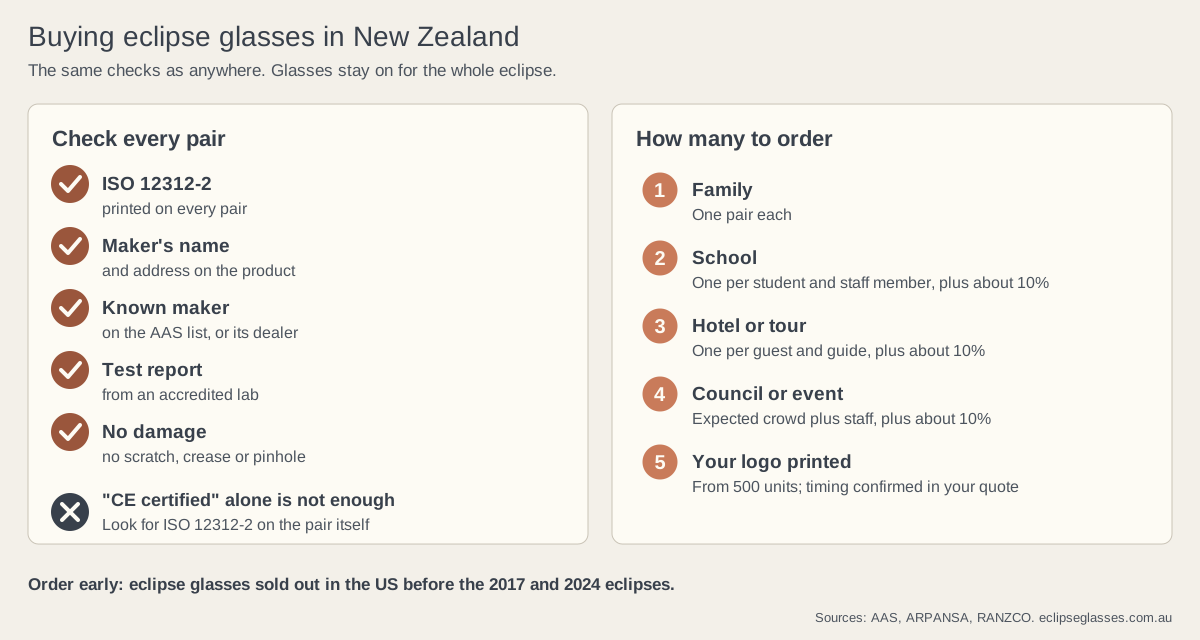
A partial eclipse, even at 99%, is never safe without certified eclipse glasses, and neither is a ring of fire. Wear glasses that meet ISO 12312-2 for the whole eclipse, totality included. Glasses that meet the standard have no fixed expiry date: a pair under 10 years old and in perfect condition can be used again, but throw out any pair that is scratched, creased or torn. You can order our certified eclipse glasses for delivery to New Zealand for a flat A$19.95, shipping from NSW by 31 May 2028. Our guide to buying eclipse glasses in New Zealand covers what to check, and why you need eclipse glasses explains what an eclipse can do to your eyes.
FAQ
When is the next solar eclipse in New Zealand?
Saturday 22 July 2028. It is total in Otago and Southland, including Queenstown and Dunedin, at about 4:17pm NZST, and partial everywhere else in New Zealand.
When is the next total solar eclipse in the North Island?
13 July 2037, when totality crosses the central North Island through Taupō, Hastings and Napier in the mid-afternoon, with about 2 minutes 19 seconds in Napier.
Will Auckland see a total eclipse?
Not before 2040. Auckland comes closest on 13 July 2037, with 98% of the Sun covered.
Will Wellington see a total eclipse?
Not before 2040, but it comes very close: 97% covered under the 2035 ring of fire and 99% in the total eclipse of 26 December 2038.
Is there a ring of fire eclipse in New Zealand?
Yes. On the morning of 10 March 2035 an annular eclipse crosses from Westport and Nelson to the Wairarapa, with the ring seen for about a minute.
When was the last total solar eclipse in New Zealand?
1965, when only a small part of Northland saw totality. 22 July 2028 is the first total eclipse visible from New Zealand since then.
Can I use my 2028 eclipse glasses again?
For 2035, yes, if they meet ISO 12312-2 and are in perfect condition. Glasses can be reused while they are under 10 years old and undamaged, so for 2037 and 2038 plan on a fresh pair. Check them before every use.
Sources
All checked 11.11.2026.
- NASA (Fred Espenak), decade tables of solar eclipses and the Besselian elements for each eclipse. Eclipse predictions by Fred Espenak, NASA's GSFC.
- Solar-eclipse.info, Napier, 13 July 2037 and Palmerston North, 26 December 2038.
- University of Waikato, Physics Stop blog on the 2037 and 2038 eclipses.
- RNZ, 2028 total solar eclipse in New Zealand likely big tourism drawcard.
- ARPANSA, Solar eclipse.
- American Astronomical Society, Solar eclipse eye safety and reputable vendors of solar viewers and filters.
- Times and coverage calculated by Aura Sight from the NASA elements with the same method as our 2028 eclipse map.

Certified eclipse glasses from Aura Sight
ISO 12312-2 certified, lab-tested and made by Rainbow Symphony, with a QR batch certificate on every pair. A$5.45 a pair from NSW stock, delivered Australia-wide (New Zealand too).